



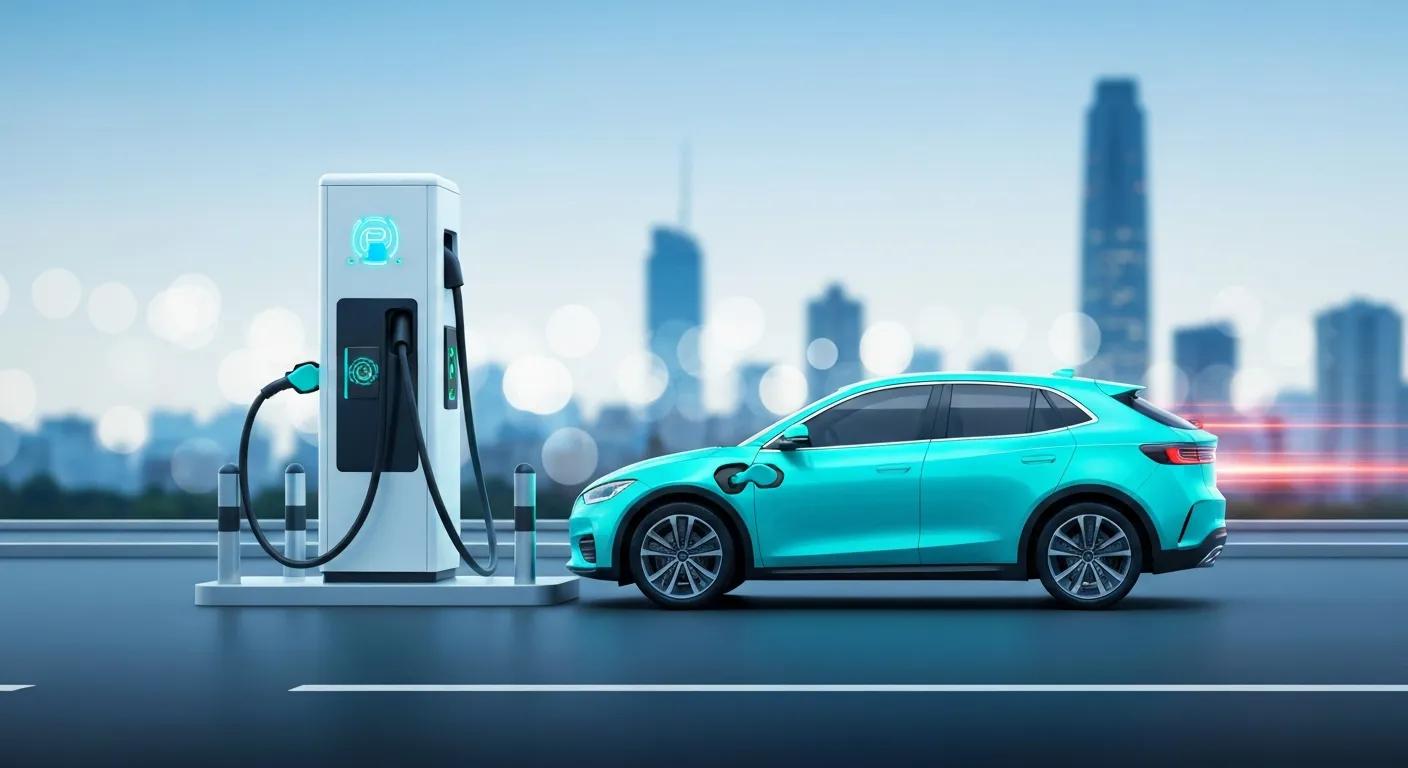

“The future of transportation is electric, and it’s happening now,” said Elon Musk, a pioneer in the electric vehicle industry. As the world shifts towards sustainable energy solutions, installing an electric vehicle charger at home is becoming increasingly popular. As approved installers for multiple EV charging brands, we have completed numerous installations and can offer tailored recommendations to meet your specific needs.
Our expertise enables us to discuss the advantages of each available option and guide you in choosing the right type of charging point for your electric vehicle. In this comprehensive guide, we will walk you through the process of installing an EV charger, ensuring that you have all the necessary information to make an informed decision.
Key Takeaways
- Understanding the different types of EV chargers and their installation requirements
- Assessing your specific needs for charging your electric vehicle
- Choosing the right type of charging point for your home
- Overview of the installation process and what to expect
- Benefits of having a professionally installed EV charger
Understanding EV Charger Basics
The world of EV charging can be complex, but understanding the basics is the first step towards a seamless installation process. As we navigate the various options available, it’s essential to consider the types of EV chargers, their power ratings, and charging speeds.
Types of EV Chargers Available in the UK
The UK market offers several types of EV chargers, each with its unique characteristics. Understanding these differences is crucial for selecting the right charger for your needs.
Level 1, 2, and 3 Charging Explained
EV chargers are categorised into three levels based on their charging speed. Level 1 chargers use a standard household socket and are the slowest. Level 2 chargers are faster and require a dedicated 240-volt charging station. Level 3 chargers, also known as DC Fast Chargers, are the fastest and can charge an EV to 80% in under 30 minutes.
| Charger Level | Charging Speed | Typical Use |
|---|---|---|
| Level 1 | Slow (up to 3 kW) | Overnight charging at home |
| Level 2 | Fast (up to 22 kW) | Home and public charging points |
| Level 3 | Rapid (up to 350 kW) | Highway rest stops and rapid charging corridors |
Socket Types and Compatibility
EV chargers come with different socket types, including Type 2 and CCS. Ensuring compatibility between your vehicle and the charger is vital.
Power Ratings and Charging Speeds
The power rating of an EV charger determines its charging speed. Higher power ratings result in faster charging times. Common power ratings include 3 kW, 7 kW, and 22 kW.
Smart vs. Non-Smart Charging Options
Smart chargers can be controlled and monitored remotely, offering benefits like scheduled charging and energy usage tracking. Non-smart chargers, on the other hand, are simpler and often less expensive.
OZEV-Approved Smart Chargers
OZEV-approved smart chargers meet specific standards for safety and functionality. These chargers are eligible for government incentives and can enhance the overall efficiency of your EV charging setup.
At Downlight Electrical, we pride ourselves on providing a highly efficient service and can offer a swift process from initial enquiry to the completed installation.
Assessing Your Home’s Electrical Capacity
Before installing an EV charger, it’s crucial to assess your home’s electrical capacity to ensure a safe and efficient charging process. This step is vital when considering electric car charger installation steps.
Evaluating Your Current Electrical Setup
To determine if your home can support an EV charger, we need to evaluate your current electrical setup. This involves checking your consumer unit, the condition and age of your electrical wiring, and the overall capacity of your electrical system. It’s a critical step in installing an EV charging point at home.
Understanding Load Capacity Requirements
EV chargers require a significant amount of power, so understanding your home’s load capacity is vital. We must ensure that your electrical system can handle the additional load without overloading or causing safety issues.
Potential Upgrades Needed for Installation
In some cases, your electrical system may require upgrades to support the EV charger. This could involve upgrading your consumer unit or replacing old wiring. We will assess what upgrades are necessary during the installation process.
Consumer Unit Considerations
Your consumer unit is the heart of your electrical system. We need to check if it’s compatible with the EV charger and if it has the necessary spare capacity.
Earthing Requirements
A proper earthing system is essential for safety. We will check your earthing system to ensure it meets the necessary standards for EV charger installation.
| Aspect | Requirements |
|---|---|
| Consumer Unit | Compatible with EV charger, spare capacity |
| Earthing System | Meets necessary safety standards |
| Wiring Condition | In good condition, suitable for EV charger load |
Choosing the Right EV Charger for Your Needs
As you consider installing an EV charger, understanding the various options is key to making an informed decision. With the UK market offering a diverse range of EV chargers, selecting the ideal one can significantly impact your electric vehicle (EV) ownership experience.
Popular EV Charger Brands in the UK
The UK is home to several reputable EV charger manufacturers. Some of the most popular brands include:
- Rolec
- Hypervolt
- Zappi (Myenergi)
- Andersen
- OHM
These brands offer a variety of chargers with different features and capabilities. We have established partnerships with several of these manufacturers to ensure our customers receive high-quality products.
Our Approved Manufacturer Partnerships
Our partnerships with leading manufacturers enable us to offer a curated selection of EV chargers that meet the highest standards of quality and reliability. This ensures that our customers can benefit from the latest technology and innovations in EV charging.
Features to Consider When Selecting a Charger
When choosing an EV charger, several features are worth considering:
| Feature | Description | Benefit |
|---|---|---|
| Charging Speed | Fast, rapid, or slow charging options | Reduces charging time |
| Connectivity | Smartphone app connectivity for monitoring and control | Enhances user experience and allows for remote management |
| Safety Features | Overcharge protection, ground fault protection | Ensures safe operation |
Tethered vs. Untethered Options
The choice between tethered and untethered EV chargers depends on your specific needs. Tethered chargers come with a cable attached, while untethered chargers require you to use your vehicle’s cable.
“Tethered chargers offer convenience, as they come with a pre-attached cable, making it easier to charge your vehicle without having to handle cables.”
Future-Proofing Your Installation
Future-proofing your EV charger installation involves considering compatibility with future EV models and potential upgrades to your home’s electrical system.
Vehicle Compatibility Considerations
It’s essential to ensure that the chosen EV charger is compatible with your vehicle. Most chargers are designed to work with a wide range of EV models, but checking compatibility is crucial to avoid any issues.
We can discuss with you the advantages of each available option and offer a recommendation that will meet your requirements. By understanding your needs and preferences, we can guide you towards the most suitable EV charger for your home.
Step-by-Step EV Charger Installation Process Explained
To ensure a smooth EV charger installation, it’s crucial to follow a step-by-step guide. This process involves several key stages, from initial assessment to final testing.
Initial Site Assessment and Consultation
The first step in installing an EV charger is conducting a thorough site assessment. Our experts will evaluate your home’s electrical setup to determine the best location for the charger and identify any potential issues.
Obtaining Necessary Permits and Approvals
Before commencing the installation, we must obtain the necessary permits and approvals. This includes:
- Compliance with Building Regulations
- Notification to the Distribution Network Operator (DNO)
Building Regulations Compliance
We ensure that our installation meets all relevant building regulations, including electrical safety standards.
DNO Notification Requirements
We will notify the DNO to ensure that they are aware of the new EV charger installation, which is a requirement for most installations.
Electrical Preparation Work
Preparation is key to a successful installation. This may involve upgrading your electrical setup to accommodate the charger.
Mounting and Connecting the Charging Unit
Once the preparation work is complete, we will mount the charging unit in the agreed location and connect it to your electrical system.
Testing and Commissioning
The final stage involves testing the EV charger to ensure it is working correctly and safely.
Electrical Safety Certification
Upon completion, we provide an Electrical Installation Certificate, confirming that the work has been done to the required safety standards.
Here’s an overview of the typical costs associated with different aspects of EV charger installation:
| Installation Aspect | Typical Cost Range (£) |
|---|---|
| Initial Site Assessment | 100-200 |
| Electrical Upgrade (if necessary) | 500-1,500 |
| EV Charger Unit | 500-1,000 |
| Installation Labour | 300-800 |
Cost Considerations for EV Charger Installation
When considering the installation of an EV charger, understanding the costs involved is crucial. The total expense can be broken down into several key components.
Equipment Costs Breakdown
The cost of the EV charger itself varies widely depending on the type and features. For instance, basic Level 2 chargers can start at around £300, while more advanced smart chargers with additional features can cost upwards of £1,000.
| Charger Type | Approximate Cost |
|---|---|
| Basic Level 2 Charger | £300-£500 |
| Smart Charger with Wi-Fi Connectivity | £800-£1,200 |
Installation Labour Costs
Labour costs for installing an EV charger can also vary, depending on the complexity of the installation and the electrician’s rates. On average, one can expect to pay between £500 and £1,500 for labour.
“The labour cost is a significant portion of the total expense, and it’s essential to get quotes from multiple certified electricians to compare prices.”
Available Grants and Incentives in the UK
The UK government offers various grants and incentives to encourage the adoption of electric vehicles and the installation of EV chargers.
OZEV Grant Eligibility
The OZEV grant can provide up to £350 towards the cost of installing a home EV charger. Eligibility criteria include having a dedicated parking space and a qualifying electric vehicle.
Local Council Schemes
Some local councils in the UK offer additional grants or schemes to support EV charger installations. These can vary significantly, so it’s worth checking with your local council for specific incentives.
Long-Term Cost Benefits
While the initial cost of installing an EV charger may seem significant, there are long-term cost benefits to consider. Charging an electric vehicle is generally cheaper than fuelling a petrol or diesel car, and there are also potential savings on maintenance costs.
By understanding the various cost components and available incentives, homeowners can make informed decisions about installing an EV charger, ultimately contributing to a more sustainable and cost-effective transportation solution.
Common Installation Challenges and Solutions
Installing an EV charger can be a straightforward process, but several challenges may arise. Homeowners may face issues that require careful consideration and professional solutions to ensure a safe and efficient installation.
Distance from Consumer Unit Issues
One common challenge is the distance between the EV charger and the consumer unit. A significant distance can lead to increased installation costs due to the need for additional wiring. “The further the charger is from the consumer unit, the more complex the installation becomes,” says an expert in electrical installations. To mitigate this, it’s essential to assess the installation site carefully and plan the wiring route efficiently.
Dealing with Older Properties
Older properties can present unique challenges, such as outdated electrical systems. Upgrading the electrical setup may be necessary to support the EV charger. When dealing with older homes, it’s crucial to consider the condition and capacity of the existing electrical infrastructure.
Listed Building Considerations
For listed buildings, there are additional considerations. Homeowners must ensure that any electrical work complies with conservation regulations. It’s vital to work with installers who have experience with listed properties to navigate these requirements successfully.
Limited Space Considerations
Limited space can also be a challenge, particularly in urban areas. Creative solutions, such as wall-mounted chargers, can help maximise available space. We recommend assessing the property to identify the most suitable location for the charger.
Overcoming Connectivity Problems
Connectivity issues can affect smart EV chargers. Ensuring a stable internet connection is vital for their operation.
Wi-Fi Signal Strength Solutions
To overcome Wi-Fi signal strength issues, homeowners can consider installing Wi-Fi extenders or mesh networks to provide a reliable connection for their EV charger.
By understanding these common challenges and implementing the right solutions, homeowners can enjoy a seamless EV charging experience. Professional installers play a crucial role in navigating these challenges and ensuring a successful installation.
Safety Considerations and Best Practices
When installing an EV charger, safety should always be our top priority. Ensuring that the installation is done correctly and safely is crucial for the well-being of both the users and the electrical system of the home.
Electrical Safety Standards for EV Chargers
Adhering to electrical safety standards is vital. This includes complying with specific regulations and codes of practice.
BS7671 Requirements
The BS7671 standard outlines the requirements for electrical installations in the UK. For EV charger installations, this means ensuring that the electrical system can support the additional load.
IET Code of Practice
The IET Code of Practice provides guidance on the safe installation of EV charging points. It covers aspects such as the selection of equipment and the installation process.
Weather Protection Requirements
EV chargers installed outdoors must be protected against the elements. This involves selecting chargers with appropriate IP (Ingress Protection) ratings.
| IP Rating | Description |
|---|---|
| IP65 | Dust-tight and protected against water jets |
| IP67 | Dust-tight and protected against immersion up to 1m |
Preventing Unauthorised Access
To prevent unauthorised use, it’s essential to incorporate security features into the EV charger installation, such as lockable enclosures.
Regular Maintenance Recommendations
Regular maintenance is crucial to ensure the EV charger operates safely and efficiently. This includes periodic inspections and software updates for smart chargers.
By following these safety considerations and best practices, homeowners can ensure a safe and efficient EV charging experience.
Why Professional Installation Matters
A professionally installed EV charger provides peace of mind and optimal performance. While the idea of DIY installation might seem appealing, the risks associated with it far outweigh any potential savings.
Risks of DIY Installation
Installing an EV charger is not a straightforward task. It involves complex electrical work that, if not done correctly, can lead to safety hazards, including electrical shocks and fires.
- Risk of electrical shock or fire due to improper installation
- Potential for damaging your vehicle’s electrical system
- Voiding manufacturer warranties due to non-compliance with installation standards
Benefits of Using Approved Installers
Using approved installers like Downlight Electrical ensures that your EV charger is installed to the highest standards. Benefits include:
- Compliance with UK electrical safety standards
- Manufacturer warranty protection
- An efficient installation process minimises downtime
Manufacturer Warranty Protection
One of the significant advantages of using approved installers is that they ensure your EV charger’s manufacturer warranty remains valid. This protects your investment and provides peace of mind.
Our Expertise at Downlight Electrical
At Downlight Electrical, we pride ourselves on our expertise in EV charger installations. Our team is trained to handle installations of all complexities, ensuring a smooth and efficient process.
Our Efficient Installation Process
We understand the importance of getting back on the road quickly. Our streamlined installation process is designed to minimise disruption, ensuring your EV charger is up and running as soon as possible.
After-Sales Support and Service
Our commitment doesn’t end with the installation. We offer comprehensive after-sales support to ensure your EV charger continues to operate optimally. For a full quotation and to discuss your EV charger installation needs, please give our office a call on 01252 265094.
Conclusion: Powering Your EV Journey
Installing an electric vehicle charger at home is a significant step towards a more sustainable and environmentally friendly lifestyle. By following our comprehensive electric vehicle charger installation guide, you can ensure a safe and efficient installation process.
We have covered the essential aspects of EV charger installation, from understanding the basics to assessing your home’s electrical capacity and choosing the right charger for your needs. Our step-by-step guide has walked you through the installation process, highlighting the importance of professional installation and safety considerations.
At Downlight Electrical, we specialise in installing EV charging points at home. Our team of experts is dedicated to providing a seamless and hassle-free experience. If you’re ready to take the next step in your EV journey, we encourage you to contact us for a consultation and quote.
EV Charger FAQs
What is the typical cost of installing an EV charger at home?
The cost of installing an EV charger at home can vary depending on several factors, including the type of charger, installation complexity, and any necessary electrical upgrades. We provide a detailed breakdown of the costs involved in our guide.
How long does it take to install an EV charger?
The installation time for an EV charger can range from a few hours to a full day, depending on the complexity of the job and any additional work required, such as upgrading the electrical setup
Can I install an EV charger myself, or do I need a professional?
While it’s technically possible to install an EV charger yourself, we strongly advise against it due to safety concerns and the potential for voiding manufacturer warranties. Our team of approved installers ensures a safe and compliant installation
What are the benefits of smart EV chargers compared to non-smart chargers?
Smart EV chargers offer several benefits, including the ability to charge your vehicle during off-peak hours, monitor energy usage, and receive notifications. We discuss the advantages of smart chargers in more detail in our guide
Are there any grants or incentives available for EV charger installation in the UK?
Yes, there are grants and incentives available for EV charger installation in the UK, such as the OZEV grant. We provide information on the available schemes and how to claim them.
How do I choose the right EV charger for my needs?
Choosing the right EV charger depends on several factors, including your vehicle’s compatibility, charging requirements, and personal preferences. We offer guidance on selecting the most suitable charger for your needs.
What safety considerations should I be aware of when installing an EV charger?
Safety considerations for EV charger installation include complying with electrical safety standards, ensuring weather protection, and preventing unauthorised access. We cover these topics in our safety considerations section.
Can I install an EV charger in an older property?
Yes, it is possible to install an EV charger in an older property, but it may require additional work, such as upgrading the electrical setup. We discuss the specific considerations for older properties in our guide.
How do I maintain my EV charger to ensure optimal performance?
Regular maintenance is essential to ensure your EV charger operates safely and efficiently. We provide recommendations on maintaining your EV charger.